Define the product and phase
Classify the Homestead property as new construction, recent resale, established housing, condominium, acreage or another form before choosing comparables or an inspection plan.
 HOMESTEADHOMESReal Estate Partners · Real Broker
Call or email Dusko directly, or use the secure consultation form so the right team member can prepare for your question.
Dusko remains the primary agent, working alongside Maxwell Rand, the featured REPYYC REALTOR® for this guide. The wider Real Estate Partners team can add search, marketing and operational support around the move.
For buyers, that may be an address, financing range and property concern. For sellers, it may be timing, improvements, documentation and the next move.
The Homestead context: Homestead should be searched as more than one property category. New construction and recent resale homes, compared by builder, phase, specification, warranty and possession terms. From there, the conversation can focus on the individual home, current alternatives and your timing.
Classify the Homestead property as new construction, recent resale, established housing, condominium, acreage or another form before choosing comparables or an inspection plan.
Review the Homestead builder agreement, specification, upgrade schedule, warranty coverage, possession terms, deficiencies, landscaping and total completion cost; compare the result with available resale alternatives.
Confirm which Homestead roads, parks, schools, retail, transit and amenities are operating today, which are approved or funded, and which remain conceptual.
Verify land use, title, permits, site conditions, insurance, schools, routes and current listing status for the exact Homestead address rather than relying on the community name.
Share the property forms that fit—such as New-build and recent resale opportunities, multiple builders or product types, and detached and attached choices where offered—plus financing range, timing and any address already under review. New construction and recent resale homes, compared by builder, phase, specification, warranty and possession terms.
Share the property type, improvements, documents and intended timing. A useful comparison looks beyond base price to upgrades, landscaping, warranties, possession risk, future roads and amenities, and nearby resale competition. Townhome and attached products, including ownership-cost and document differences.
Name the exact concern. The Homestead working list currently includes builder contract and warranty terms, Possession, deficiency and holdback details, and Future development and route plans, each of which needs property-level confirmation. Classify the Homestead property as new construction, recent resale, established housing, condominium, acreage or another form before choosing comparables or an inspection plan.
Homestead is an evolving market where builder, phase, lot, specification and surrounding construction can create very different ownership propositions. The first comparison and verification prompts are New-build and recent resale opportunities and builder contract and warranty terms; the consultation can turn those community signals into an address-specific work plan. Detached homes across the available new-build and resale inventory.
Put multiple builders or product types and detached and attached choices where offered beside the routes, services, amenities and location relationships identified in the local evidence. Then resolve Possession, deficiency and holdback details for the address instead of treating the community description as property evidence. Growing community services: Growing community services. This is part of the everyday Homestead experience; the distance and route still depend on the address. Review the Homestead builder agreement, specification, upgrade schedule, warranty coverage, possession terms, deficiencies, landscaping and total completion cost; compare the result with available resale alternatives.
Share the address and the question you want answered first. The team can prepare before following up.
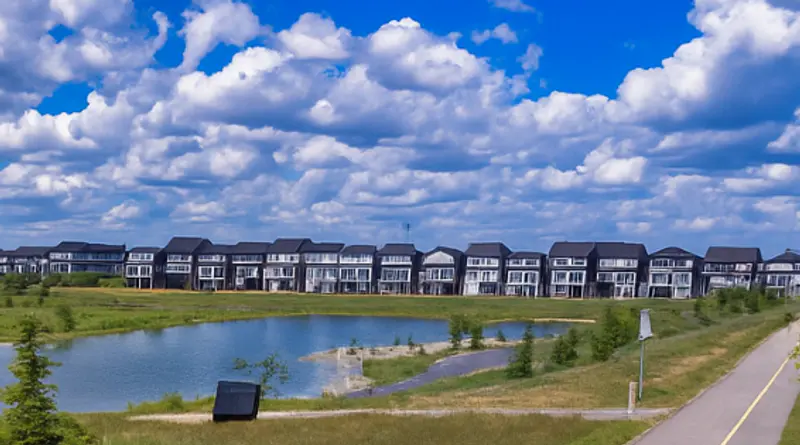
Homestead is a developing northeast Calgary community east of Stoney Trail and north of McKnight Boulevard NE. The purchase decision must separate builder inventory from resale supply and compare phase, lot, specification, upgrade package, warranty, possession timing and future-work exposure. The community plan describes pathways, play spaces and wetland areas, but the operating status, completion timing and any ownership obligations must be confirmed for the exact phase and address. No citywide population, price or tenure number is relabelled as a Homestead-specific fact because an exact released micro-community profile has not been matched. Current title, permits, architectural controls, schools, routes, services and construction conditions remain property- and date-specific.
This micro-geography is source-derived and deliberately carries no borrowed municipal demographic profile. Historical Census context, current listing status and address-specific property evidence remain separate layers.
Historical community evidence, current listing status and address-specific property records remain separate layers throughout the guide.
See sources and methodology →Homestead is an evolving market where builder, phase, lot, specification and surrounding construction can create very different ownership propositions. This record turns the community file into route-specific work while keeping the subject property and current professional advice separate.
Which Homestead property form, ownership structure and completion stage fit the intended use and budget? For this consultation brief, use that evidence to state the buyer's actual trade-off before selecting a search or tour plan. Read it beside: Confirm the exact Homestead boundary and the listing's community field against the current municipal map or address record before publication. Comparison checkpoint: Saddle Ridge. Compare a more established northeast alternative with deeper resale inventory and a different mix of housing ages and forms. Current listing status still belongs to the approved live record.
Position the Homestead property against current alternatives with the same product type, completion stage, site context and ownership structure. Applied to the consultation brief, the evidence helps identify the seller document or improvement record that should be gathered first. Read it beside: Use current business and operator sources before naming Homestead shops, health services or daily conveniences. Comparison checkpoint: Redstone. Compare a nearby newer community where builder, resale, attached and detached options require separate price and document comparisons. Condition and legality still require the documents and review appropriate to the property.
Classify the Homestead property as new construction, recent resale, established housing, condominium, acreage or another form before choosing comparables or an inspection plan. Within the consultation brief, its job is to name the address-level record or specialist needed after the initial call. Read it beside: Detached homes across the available new-build and resale inventory. Comparison checkpoint: Cornerstone. Compare a nearby northeast new-community search with a broader mix of builder and resale options and different service and route relationships. A lender or mortgage professional must decide how the actual property affects financing acceptance.
The developer places Homestead in northeast Calgary, east of Stoney Trail and north of McKnight Boulevard NE. The consultation brief should use this record to keep the community observation separate from a conclusion about the subject home. Read it beside: Compare a nearby developing community where attached and detached forms, lot pattern and access create a distinct ownership choice. Comparison checkpoint: Cityscape. Compare a nearby developing community where attached and detached forms, lot pattern and access create a distinct ownership choice. Community context cannot establish value for the subject home.
Routes and travel times should be tested from the exact address at the time of day relevant to the household. Here, the practical use is to turn the claimed location benefit into a route, access or operating-status check. Read it beside: Community research and publication verification. Publisher record: source verification pending. Comparison checkpoint: Saddle Ridge. Compare a more established northeast alternative with deeper resale inventory and a different mix of housing ages and forms. A named source supports only the claim and geography recorded for it.
Homestead should be searched as more than one property category. New construction and recent resale homes, compared by builder, phase, specification, warranty and possession terms. Carry this into the consultation brief to classify the property form before comparing price, condition or ownership cost. Read it beside: Cornerstone — Compare a nearby northeast new-community search with a broader mix of builder and resale options and different service and route relationships. Comparison checkpoint: Redstone. Compare a nearby newer community where builder, resale, attached and detached options require separate price and document comparisons. A comparison relationship does not make two properties or communities equivalent.
Compare a nearby northeast new-community search with a broader mix of builder and resale options and different service and route relationships. For the consultation brief workflow, use it to explain why a nearby community is or is not a useful current alternative. Read it beside: Use restrained, verifiable language and professional media that shows the actual property and community rather than generic luxury or lifestyle claims. Comparison checkpoint: Cornerstone. Compare a nearby northeast new-community search with a broader mix of builder and resale options and different service and route relationships. Historical evidence must not be presented as current inventory or operating status.
Migration inventory, retained media and legacy page review. Publisher record: Real Estate Partners. The next step in the consultation brief is to attach the source and its limitation to any factual statement used in the advice. Read it beside: Verify land use, title, permits, site conditions, insurance, schools, routes and current listing status for the exact Homestead address rather than relying on the community name. Comparison checkpoint: Cityscape. Compare a nearby developing community where attached and detached forms, lot pattern and access create a distinct ownership choice. The paired records define the next question; they do not settle the property conclusion.
Compare the community, the type of home and the property-specific details in the order that makes sense for your move.
Use the Homestead buyer guide to organize the property form, timing, financing and unresolved address-level questions.
Explore →02Use the seller guide to gather improvement records, property documents, timing and the intended next move before the consultation.
Explore →03See how community context, live listing status, market periods and property-specific conclusions are kept separate.
Explore →Start with the practical questions, then open the detailed guide that matches the property or decision in front of you.
Share the property forms, financing range, timing, priorities and any address already under review. Which Homestead property form, ownership structure and completion stage fit the intended use and budget?
Share the property type, major improvements, available documents, timing and intended next move. Position the Homestead property against current alternatives with the same product type, completion stage, site context and ownership structure.
Classify the Homestead property as new construction, recent resale, established housing, condominium, acreage or another form before choosing comparables or an inspection plan. Bring the address so the community-level question can be separated from the title, document, condition or specialist file.
Call 587-355-1774 or email info@prpty.ca. Dusko Sremac is the primary agent for this site, with Maxwell Rand as the REALTOR® featured for Homestead. The wider Real Estate Partners by Real Broker team supports the relationship with coordinated search, marketing and operational capacity.
Address-level permits, land use and planning records
Open official source ↗02City of Calgary Homestead profileCommunity research and publication verification
Open official source ↗03Purchasing a new homeGovernment of Alberta · accessed 2026-09-12Provincial guidance on purchase contracts, land titles, property reports and home inspections
Open official source ↗Official records provide dated community context. Current listing status and conclusions about one property still require the applicable live record and property documents.
Dusko Sremac is the primary contact, backed by Real Estate Partners by Real Broker.